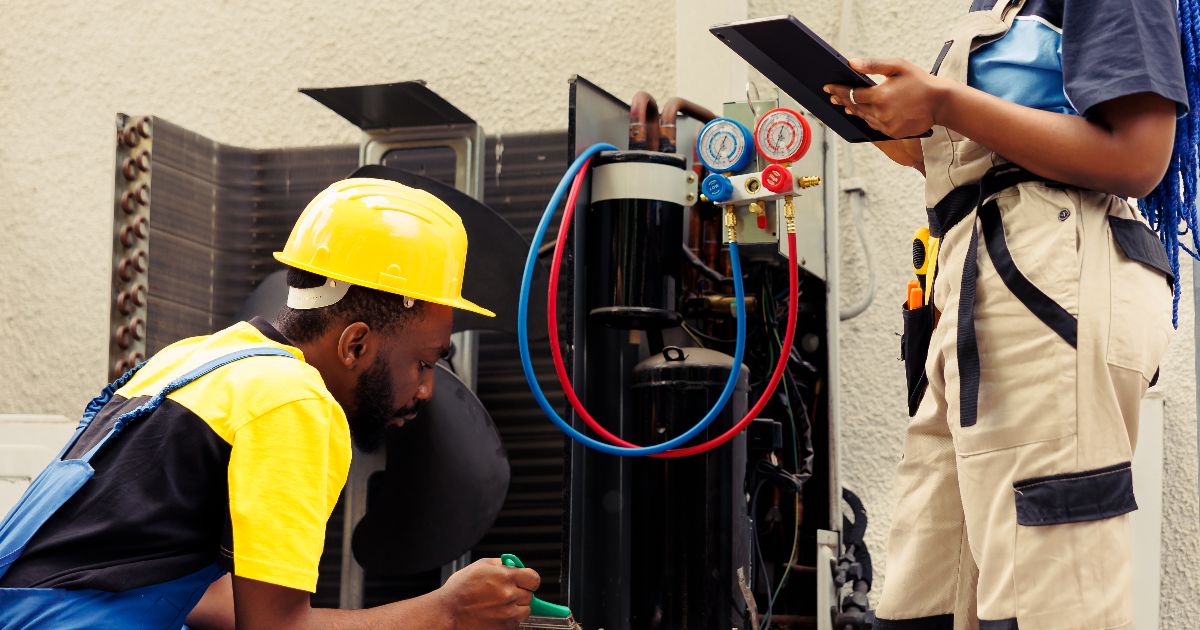
If your AC is not cooling, the problem could be the compressor or the capacitor.
These two parts work together, but they fail in different ways.
Knowing the signs can help you understand what is wrong before calling for repair.
What Does an AC Capacitor Do?
The capacitor helps power the AC motors. The capacitor gives the system the boost it needs to start.
Your AC uses capacitors to help:
- Start the compressor
- Run the fan motor
- Keep airflow moving
Without a working capacitor, the AC may struggle to turn on or may not start at all.
What Does an AC Compressor Do?
The compressor is one of the most important parts of an AC system. The compressor moves refrigerant and removes heat from your home.
It works like the heart of the AC system. It pumps refrigerant through the coils so the system can cool the air.
If the compressor fails, the AC cannot cool properly.
Signs of a Bad Capacitor
Capacitor problems are common in hot climates like Miami. A bad capacitor usually causes starting problems.
Common signs include:
- Clicking sounds
- Humming noise
- Fan not spinning
- AC struggles to start
- The system shuts off randomly
Sometimes the AC starts after several tries. Other times it does nothing at all.
You can also read more about an AC fan not spinning, since bad capacitors often affect fan motors.
Signs of a Bad Compressor
Compressor issues are usually more serious. A bad compressor causes poor cooling or complete cooling failure.
Signs of compressor failure:
- Warm air from vents
- Loud noises from the outdoor unit
- Circuit breaker trips often
- Outdoor unit shakes during startup
- AC runs but does not cool
In many cases, the compressor still tries to run but fails to cool the home properly.
How to Tell the Difference
Some symptoms overlap, but there are key differences. Capacitors affect startup, while compressors affect cooling performance.
Bad Capacitor:
- AC struggles to start
- Clicking or humming sounds
- The fan may stop spinning
- The system turns off quickly
Bad Compressor:
- The AC blows warm air
- Cooling is very weak
- Loud hard-start noises
- Breaker trips repeatedly
If the system starts normally but does not cool, the compressor may be the problem.
Can You Fix These Problems Yourself?
Capacitor and compressor repairs should be done by a professional.
Capacitors store electrical energy even when the system is off. Compressors also involve refrigerant and electrical work.
Safe things you can check:
- Thermostat settings
- Dirty air filters
- Tripped breakers
- Debris around the outdoor unit
Beyond that, professional diagnosis is the safest option.
Heat Makes These Problems Worse
AC systems in Miami work almost year-round. Constant use puts more stress on capacitors and compressors.
Heat and humidity force the system to cycle more often. Over time, parts wear down faster.
Common Miami conditions that increase wear:
- High outdoor temperatures
- Salt air near coastal areas
- Heavy daily AC usage
This is why many homeowners need same-day AC repair during the summer months.
How to Prevent Compressor and Capacitor Problems
Regular maintenance can extend the life of your AC. Routine service helps catch small problems early.
Helpful prevention tips:
- Replace filters regularly
- Keep coils clean
- Schedule yearly maintenance
- Fix airflow issues quickly
Even small airflow problems can put extra stress on both parts.
Catch AC Problems Before They Turn Into Bigger Repairs
A bad capacitor and a bad compressor can feel similar at first, but they affect your AC differently.
Pay attention to early warning signs before the system completely fails.
If your AC struggles to start, makes strange sounds, or blows warm air, do not ignore it.
Fast diagnosis and repair can help protect your system, lower repair costs, and keep your home comfortable.