
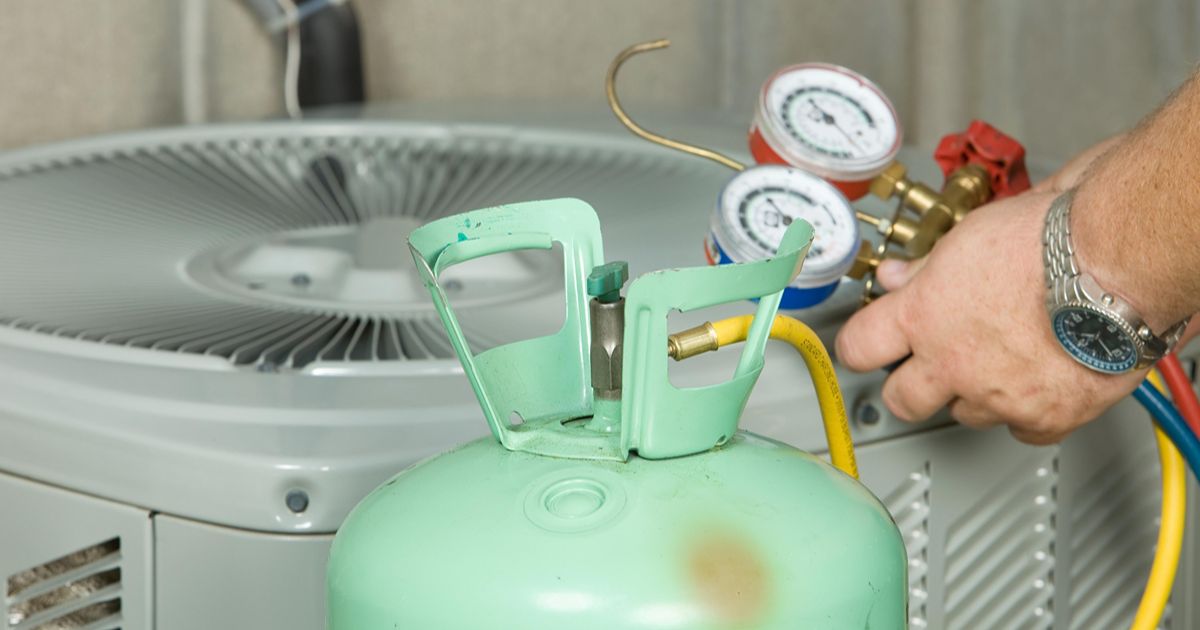
The first sign of an AC refrigerant leak in Miami is usually a house that feels damp, not hot.
Cooling fades slowly, so people blame the weather for weeks before calling anyone.
Refrigerant never gets used up the way gas or oil does. It sits in a sealed loop, so a low level means it escaped somewhere.
Here is what a leak looks like before it kills a compressor.
Signs Your AC Has a Refrigerant Leak
Watch for these, roughly in the order they appear:
- The air feels clammy even when the thermostat reads the set temperature
- The system runs far longer than it used to, or never shuts off at all
- Air from the vents feels cool but not cold
- Ice forms on the copper suction line outside or on the indoor coil
- You hear a hiss or a soft bubbling near the indoor unit
- Water shows up around the air handler after ice melts
- The electric bill climbs while your habits stay the same
One sign alone proves nothing. Three together usually mean a charge problem.
If yours is past weak cooling and now blowing warm air, the system has likely lost a large share of its charge.
Why the House Feels Sticky Before It Feels Hot
An air conditioner removes humidity from the air as a side effect of cooling it. Low refrigerant weakens that first.
The thermostat may still hit 75, but the air holds more moisture, so the room feels heavy and cool surfaces sweat.
Miami hides this well. Everyone expects humid air in August, so a sticky living room reads as weather instead of a fault.
Watch for damp smells, foggy morning windows, or doors that start to stick.
Those signals show up long before the temperature complaint does.
Ice on the Line Is a Warning, Not Extra Cooling
Ice means the coil got too cold, and low refrigerant is one of the main reasons that happens.
Pressure inside the coil drops, the coil temperature falls below freezing, and the moisture in your air freezes onto it instead of draining away.
That ice blocks airflow, making the freezing worse. Our breakdown of why an AC coil freezes over walks through the other causes.
Shut the system off at the thermostat and let it thaw before anyone works on it.
Running a frozen system pushes liquid refrigerant back toward the compressor, and that is how a repair turns into a replacement.
Puddles, Bills, and the Slow Version of This Problem
Melting ice drips, so a leak often first appears as water near the air handler. That water is condensation.
Refrigerant escapes as a gas, leaving no puddle.
A clogged drain line can make the same mess, so it helps to know the common causes of AC water leaks before assuming the worst.
The bill tells the same story more quietly. A system with a low charge runs longer to reach the same temperature, and longer runtime raises your bill month after month.
If you are seeing higher electric bills with no change in habits, a charge problem is a suspect.
Where Leaks Start in South Florida Systems
Most leaks show up in three places: the indoor evaporator coil, the flare-and-braze joints at either end of the line set, and the service valves at the outdoor unit.
Coils fail from the inside out in humid coastal air, often as pinholes too small to see.
When corrosion has spread across a coil, a patch rarely holds, and coil replacement becomes the honest answer.
A proper leak search uses nitrogen pressure testing, electronic detection, or dye, and it takes time.
A technician who adds refrigerant without searching has not diagnosed anything.
Ask which method they used and what they found.
What Not to Do While You Wait
Skip the sealant cans sold online. They circulate throughout the whole system and can clog the metering device or contaminate recovery equipment, which some manufacturers treat as grounds for denying a warranty claim.
Do not try to add refrigerant yourself either. The EPA requires Section 608 certification for anyone who adds or removes refrigerant from a system.
If the house is unsafe hot and someone in it is elderly or ill, treat it as urgent and ask about same-day AC repair rather than waiting out the weekend.
When Weak Cooling Is Not a Refrigerant Leak
Plenty of cooling problems look identical and cost far less to fix. A clogged filter, a dirty outdoor coil, a failing capacitor, a stuck blower wheel, or leaky ductwork in a hot attic all produce weak, humid air.
A yearly AC maintenance service rules most of these out and gives a technician a baseline charge reading to compare against later.
Do not assume a leak, and be cautious with any company that reaches for the refrigerant gauges first.
Get the Leak Located Before You Pay for Refrigerant
Refrigerant is expensive, and refilling a system that still leaks means paying again next season.
Ask for the leak location in writing, compare the repair cost against replacing the coil, and keep the report for your warranty file.
For a leak search on your system, call us at 305-951-7658.