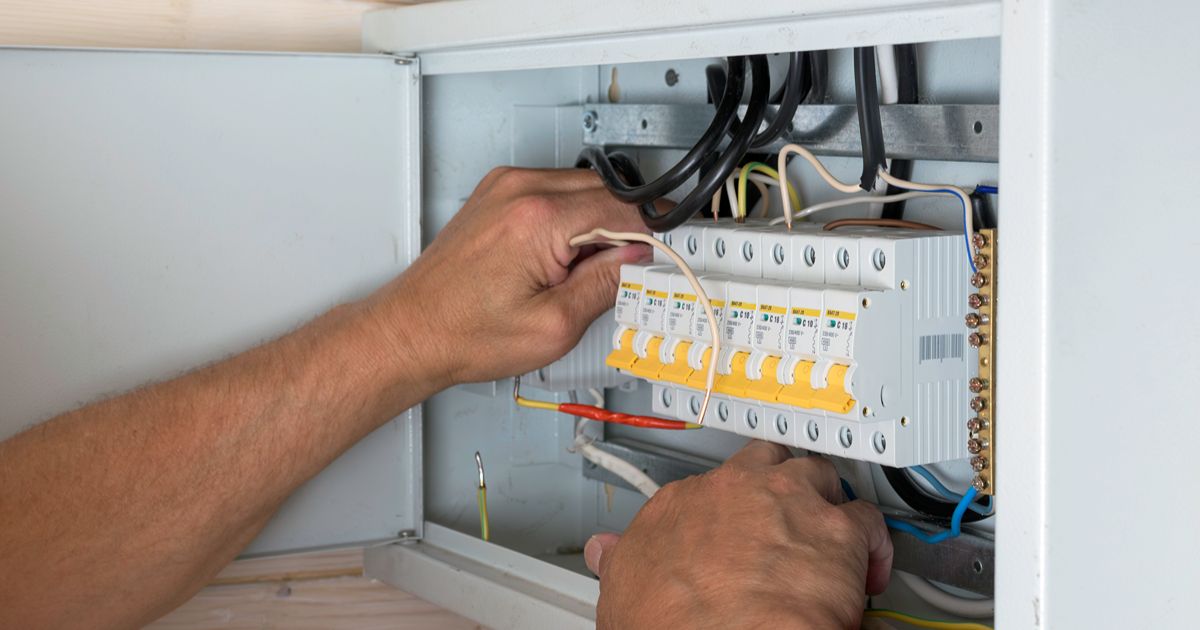
Your AC breaker is an emergency in Miami if it trips right after you reset it, you smell burning, or the outdoor unit sat in floodwater.
A single trip after a storm knocks out power is often harmless.
The rule is simple: reset it once. If it trips again, leave it off and call for help.
Is a Tripping AC Breaker an Emergency?
It depends on how it trips. A breaker that trips once and then holds is usually reacting to a power blip. A breaker that trips repeatedly is protecting your home from a fault.
Treat it as an emergency when:
- The breaker trips the moment you flip it back on.
- You smell burning plastic or see scorch marks on the panel.
- The breaker or panel cover feels hot.
- The outdoor unit hums, then the breaker trips.
- You see smoke or sparks. Call 911 if anything is burning.
That last sign gets its own safety steps in our post on smoking or sparking units.
It can usually wait when:
- It tripped once during a storm and has stayed on since.
- The AC cools normally after the reset.
Even then, book a check soon. Breakers rarely trip for no reason.
Why Miami AC Breakers Trip After Storms
Afternoon storms in Miami cause quick power flickers. When power drops and returns in seconds, the compressor tries to restart against high pressure. That hard start can pull enough current to trip the breaker.
Many thermostats and outdoor units have a built-in delay to stop this. Older systems may not. If yours trips after every flicker, the delay may be missing, or a part may be weak.
Lightning adds a second risk. A nearby strike can damage the compressor, the control board, or the wiring. If the breaker starts tripping right after a storm, mention the storm when you call.
Why Your AC Breaker Keeps Tripping
The most common causes live in the outdoor unit. Here is what a technician checks first.
- A weak capacitor. It gives the compressor the starting kick it needs. When it fails, the compressor struggles and draws too much current. Here is how to tell capacitor or compressor problems apart.
- A shorted compressor. When the motor windings fail, the breaker trips instantly. This is the most expensive cause, often about $1,500 to $3,500 installed. For larger or more complex systems, $4,000+
- An overheating unit. A dirty outdoor coil or a dead fan motor traps heat. If the outdoor unit runs hot, the compressor works harder and draws more power.
- Loose or corroded wiring. Humid, salty air attacks connections in the outdoor disconnect box. A loose wire can heat up and trip the breaker.
- Heat strips. Most Miami split systems have two breakers: one for the outdoor unit and one for the air handler. The air handler breaker also feeds the backup heat. If it trips on the first cold night of the year, read about winter AC problems that only show up here.
The Mistake That Turns a Nuisance Into a Fire Risk
The worst fix for a tripping AC breaker is a bigger breaker. Every outdoor unit has a data plate that lists a maximum breaker or fuse size. Going over that number lets the wires carry more current than they can handle.
The breaker stops tripping, but the problem does not go away. The wiring heats up instead. That is how a nuisance trip becomes a melted wire or a fire. A licensed electrician or HVAC technician should match the breaker to the data plate, not to the trips.
Also skip these common moves:
- Resetting the breaker over and over to “get it through the day.”
- Taping the breaker in the on position.
- Opening the outdoor unit’s panels yourself. Capacitors can hold a charge even with the power off.
What to Do After a Flood or Standing Water
Do not turn the AC back on if the outdoor unit sat in water. The Air Conditioning Contractors of America warns that restarting a system after water reaches electrical parts can burn out components in the indoor and outdoor units.
Leave both AC breakers off. Then have a licensed contractor inspect the unit before anyone flips them back on. In many flood cases, the equipment needs replacement, not repair.
If the breaker trips when the AC is off, or other circuits trip too, the problem may be your panel. Call a licensed electrician for that.
How to Stay Safe Until Help Arrives
Turn the thermostat to off and leave the AC breaker off. Then keep the house cool without it.
- Close blinds on sunny windows.
- Run ceiling fans and portable fans.
- Avoid using the oven and dryer in the afternoon.
- Move older family members, babies, and pets to the coolest room.
If the house is getting dangerously hot or the breaker shows signs of burning, don’t wait for business hours.
Our Miami emergency AC repair team offers same-day service. You can also read about after-hours AC help and when a call should not wait.
One Reset, Then Make the Call
A tripping AC breaker is your system asking for help, not a switch to fight with. Reset it once.
If it trips again, smells hot, or the unit was flooded, leave it off and call Rick’s Cooling at 305-951-7658.
Tell the technician when it trips, how fast, and whether a storm came first.