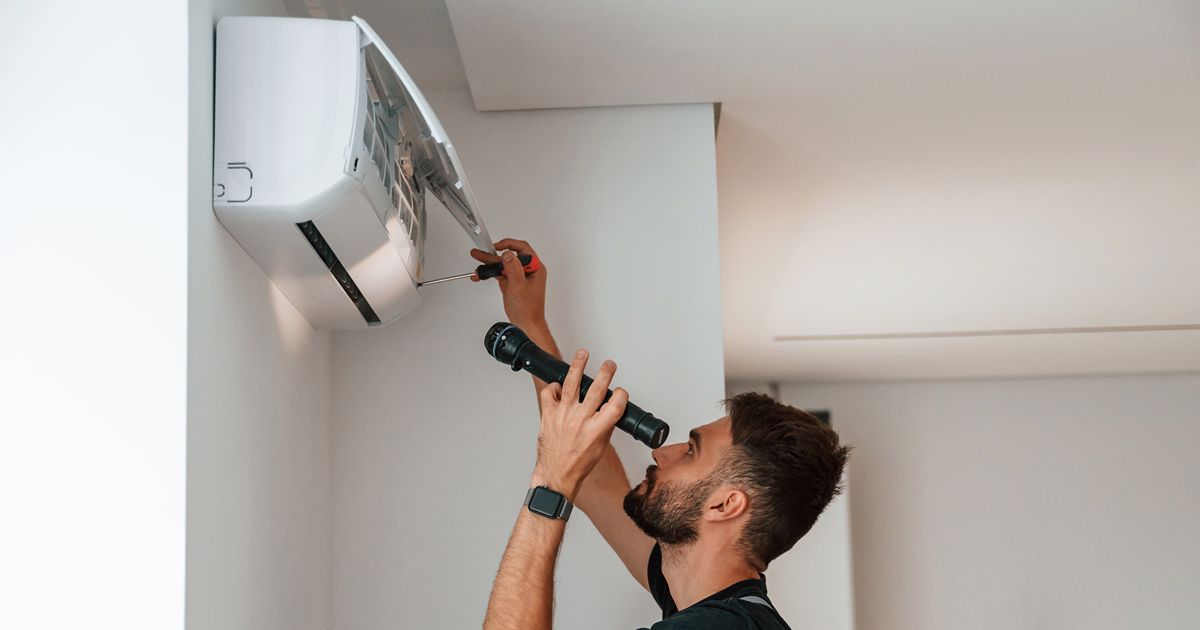
Your AC in Miami keeps short-cycling because something makes it shut off before it finishes a full cooling run.
Common culprits include a misplaced thermostat, an oversized unit, low refrigerant, or a tripped safety switch.
Some of these you can check in ten minutes. Others mean the compressor is at risk.
How Do You Know It’s Really Short-Cycling?
Short-cycling means your system starts and stops much more often than it should. A short-cycling system clicks on, runs a few minutes, and quits.
According to Trane’s short-cycling guide, a right-sized system may run only 3 to 5 minutes in mild weather and stay off for hours.
On hot days, the same system may run for hours with short breaks.
That is why the season matters in Miami. A quick run on a cool January evening is not a warning sign. The same quick run at 3 p.m. in August is.
A Simple 15 Minute Test
- Pick a hot afternoon when the house needs real cooling.
- Set the thermostat a couple of degrees below room temperature.
- Time each on-and-off period for 15 to 20 minutes with your phone’s stopwatch, and write them down.
- Runs of only a few minutes, over and over, mean something is wrong.
If the unit turns on and off within seconds, shut it off and call for help. That pattern can damage the compressor fast.
What Causes AC Short-Cycling in Miami Homes?
These 7 problems are common causes. The first three are worth checking yourself. The rest need a technician.
1. The Thermostat Sits in the Wrong Spot
A thermostat near a supply vent, in direct sun, or next to a kitchen reads the wrong temperature. Cold air from a nearby vent makes it think the room is cool, so it shuts the system down early. Loose wiring or a dying thermostat can cause random starts too.
2. A Dirty Air Filter
A clogged filter chokes airflow across the indoor coil. The system struggles, the coil gets too cold, and safety controls start cutting it off. Swap the filter first.
3. A Tripped Float Switch
Miami’s humidity puts a lot of water through your condensate drain. When the drain clogs, a float switch shuts the system off to stop an overflow. As the water level rises and falls, the system can start and stop repeatedly. A wet drain pan or a stopped drain line is the clue.
4. Low Refrigerant From a Leak
Some systems have a low-pressure switch that turns off the compressor to protect it. With a leak, that switch keeps tripping. Watch for other refrigerant leak signs, like hissing. A recharge without a leak repair is only a short-term fix.
5. A Frozen Evaporator Coil
Ice on the indoor coil blocks airflow and confuses the system. Low refrigerant and poor airflow are the usual triggers. Here is why a frozen coil shows up in humid weather.
6. An Overheating Compressor
Dirt on the outdoor coil, a weak condenser fan, or bad voltage can make the compressor overheat. A built-in thermal cutout stops it until it cools down, then it tries again. That on-and-off loop is a classic early sign of compressor failure.
7. A Failing Electrical Part
A weak capacitor or a worn contactor can make the system start and stop on its own. Here is how a technician tells a bad capacitor from a compressor problem.
Can an Oversized AC Cause Short-Cycling?
Yes. Trane names an oversized system as one of the two main causes of short-cycling, along with thermostat problems. A unit that is too big cools the air fast, hits the set point, and shuts off.
An AC removes moisture during long runs. Short runs leave the air cold but damp. Many homeowners respond by lowering the thermostat. That makes the house colder, but it does little for the sticky feel.
No repair fixes an oversized unit. If your system is the wrong size, the real fix comes when it is time to replace an old AC, with a proper load calculation first.
What You Can Safely Check Before Calling a Pro
A few checks take no tools and carry no risk:
- Replace or check the air filter.
- Note any vents, windows, or appliances near the thermostat.
- Clear leaves and debris from around the outdoor unit.
- Look for water in the drain pan under the indoor unit.
Do not add refrigerant, open electrical panels, or reset breakers repeatedly.
Repeated resets can hide a problem that is cooking a part. If the checks above don’t stop the cycling within a day, it is time to call a technician.
Stop the Cycling Before It Costs You a Compressor
Short-cycling rarely fixes itself, and every extra start wears on the most expensive part in your system.
Run the 15-minute test, check the filter and thermostat, and write down what you see.
Then schedule Miami AC repair by calling 305-951-7658, and share your timing notes with the technician.