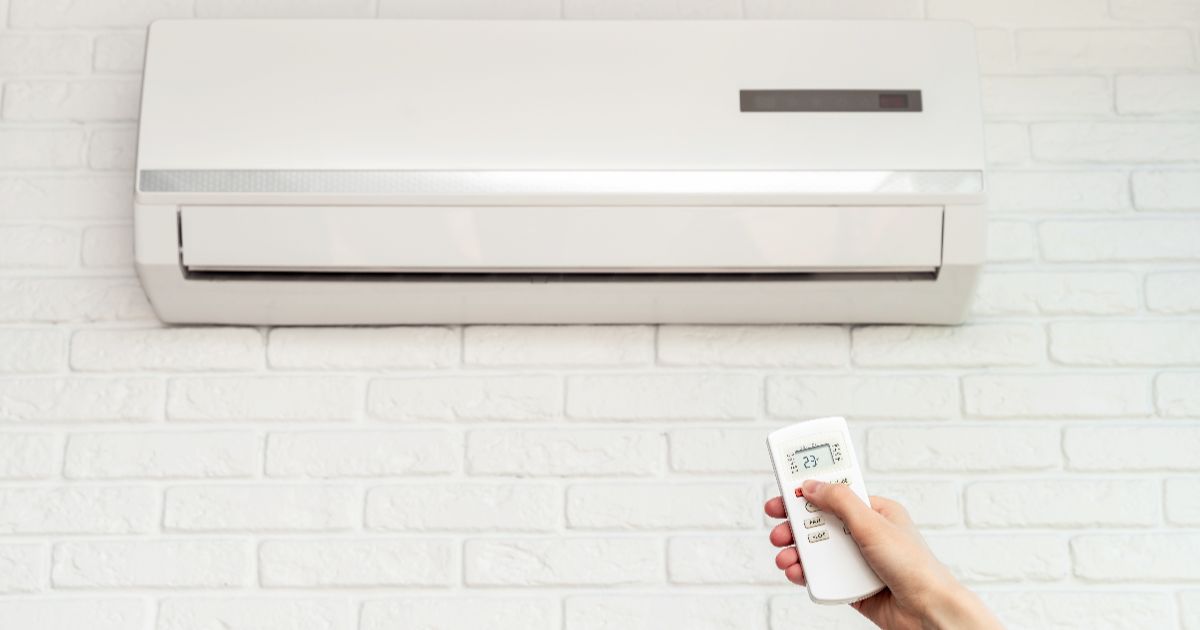
If your AC won’t turn on, the cause may be simple, like a tripped breaker, or serious, like a failed compressor.
Some problems are safe to check yourself, but others require fast professional help.
When your cooling system stops working, stress rises fast. Heat builds up. Humidity increases.
I want to walk you through clear causes, safe steps, and signs that mean you need urgent service.
Check the Thermostat First
If the thermostat is off, dead, or set wrong, the AC will not start.
Before you panic, check:
- Is the thermostat set to “Cool”?
- Is the temperature set lower than room temperature?
- Is the screen blank?
If the screen is blank, the batteries may be dead. Replace them and test again.
Sometimes, the fix is that simple.
Tripped Circuit Breaker
A tripped breaker cuts power to your AC.
Go to your electrical panel and look for a breaker labeled “AC” or “Air Conditioner.”
If it is tripped:
- Turn it fully off
- Then switch it back on
If it trips again right away, stop. Do not keep resetting it. That usually means a deeper electrical issue.
This is when professional AC repair becomes important
Blown Fuse or Shut-Off Switch
A blown fuse or an off safety switch can stop your system from starting.
Most outdoor AC units have a disconnect box mounted nearby. Make sure it is not switched off.
Inside your home, some systems also have a safety shut-off switch near the drain pan. If water backs up, it shuts the system down to prevent damage.
If you see standing water near the indoor unit, do not ignore it.
Clogged Drain Line Triggered Safety Switch
A clogged drain line can shut down your AC to prevent water damage.
Drain lines often clog in humid areas. Dirt and algae build up inside.
When the drain backs up:
- The safety switch activates
- The AC shuts off
- Cooling stops completely
If you see water near the air handler, this may be the cause.
This is not always an emergency, but it should be handled quickly.
Capacitor Failure
A bad capacitor prevents the AC motor or compressor from starting.
Capacitors store energy and help start the system. When they fail:
- You may hear clicking
- The fan may try to spin
- The system stays off
This is common in hot climates where AC runs daily.
Capacitors should only be replaced by licensed technicians. They hold an electrical charge and can be dangerous.
Compressor Problems
A failed compressor can stop the entire system.
The compressor is the heart of your AC. If it fails:
- The outdoor unit may not turn on
- You may hear humming
- The breaker may trip
Compressor repairs can be expensive. Fast diagnosis helps prevent more damage.
If you suspect compressor failure, schedule professional service right away.
Wiring or Electrical Damage
Short answer: Loose or damaged wiring can block power to the system.
Storms, power surges, and wear over time can damage electrical parts.
Signs include:
- Burning smells
- Frequent breaker trips
- The AC stopped working after a storm
This can become dangerous. Electrical issues should never be ignored.
If the problem follows a power surge or lightning storm, review these emergency warning signs.
When Is It an Emergency?
It becomes an emergency when heat levels rise fast or electrical risk is present.
Call for emergency repair if:
- Your home temperature rises above 85°F
- There is a burning smell
- The breaker keeps tripping
- You hear loud grinding or buzzing
- Water is leaking heavily
No cooling can quickly become dangerous, especially for:
- Children
- Elderly family members
- Pets
For urgent help, emergency AC repair in Miami is available.
Why You Should Plan Before Summer
Having an emergency plan prevents panic during peak heat.
Many breakdowns happen during the summer. Technicians get booked fast. Waiting days for service in high heat is not safe.
I strongly recommend reviewing why having a repair plan matters before temperatures spike.
Preventive care reduces last-minute stress.
Safe Steps You Can Try First
Before calling for service, safely check:
- Thermostat settings
- Breaker panel
- Air filter (replace if clogged)
- Outdoor unit for visible debris
Do NOT:
- Open electrical panels
- Touch wiring
- Replace capacitors yourself
- Keep resetting a tripping breaker
Simple checks are safe; electrical repairs are not.
Your safety always comes first.
Get Cool Air Back Fast and Safely
When your AC won’t turn on, the cause may be simple or serious. Start with basic checks like the thermostat and breaker.
If the system still will not run, it may involve electrical parts, the compressor, or internal safety switches.
We always recommend acting fast when cooling stops in hot weather. Ignoring early warning signs can lead to bigger repairs or unsafe indoor temperatures.
Quick action protects your home, your comfort, and your system.