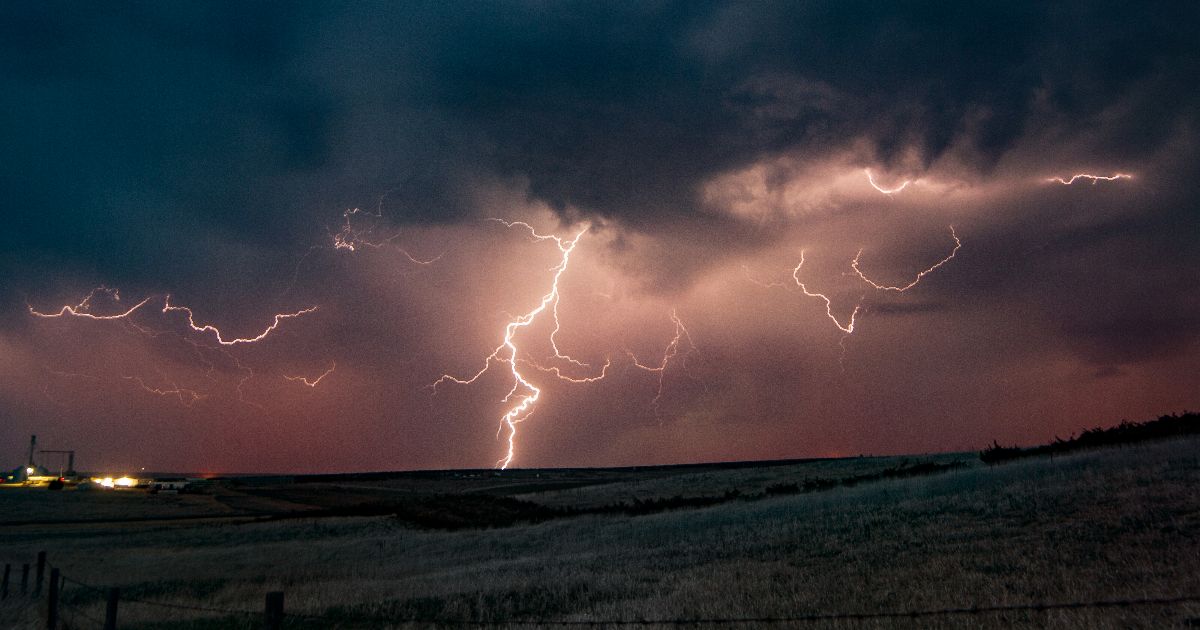
Yes, lightning can damage an AC unit. A lightning strike can burn electrical parts, stop the system from turning on, or even destroy the entire unit.
In storm-prone areas, this is a real risk. We’ve seen systems fail right after a thunderstorm.
Even if lightning does not hit your home directly, it can still cause serious damage.
How Lightning Damages an AC Unit
Lightning carries a huge amount of electricity. When it strikes near your home, that energy can travel through power lines.
A lightning strike can send a power surge through your electrical system, potentially frying AC components.
Your AC unit has sensitive electrical parts, such as:
- Capacitors
- Contactors
- Circuit boards
- Thermostat wiring
- Compressor
A sudden surge can overload these parts in seconds.
Even a nearby strike can cause a voltage spike strong enough to damage your system.
Direct Strike vs. Power Surge
There are two main ways lightning can affect your AC.
Direct Lightning Strike
This is rare but serious. If lightning hits your home or outdoor unit directly:
- The AC can burn instantly
- Wires can melt
- The unit may stop working forever
Indirect Strike or Power Surge
This is more common. Lightning hits a power line or ground near your home.
- A surge travels through your electrical panel
- Sensitive AC parts get overloaded
- Damage may not be visible right away
Most lightning damage happens from power surges, not direct hits.
Signs Your AC Was Damaged by Lightning
Sometimes the damage is obvious. Other times, it shows up slowly.
Here are common signs:
- AC will not turn on
- Breaker keeps tripping
- Burning smell near the unit
- Thermostat screen is blank
- Warm air instead of cool air
If your AC stops working after a storm, lightning damage may be the cause.
I always suggest checking the breaker first. If it keeps tripping, do not keep resetting it. That can make the damage worse.
Can Lightning Damage the Outdoor Unit Only?
Lightning can damage both indoor and outdoor parts.
Your system has two main sections:
- Outdoor condenser unit
- Indoor air handler
A surge can travel through the whole system, affecting both units.
Even your thermostat can get damaged. That small screen on the wall connects directly to the system’s wiring.
Does Insurance Cover Lightning Damage?
In many cases, yes. Most homeowner insurance policies cover lightning damage.
Home insurance often covers lightning-related AC damage, but check your policy.
You may need:
- Proof of damage
- A technician’s report
- Photos of the system
I always recommend calling your insurance company as soon as you notice the problem.
How to Protect Your AC from Lightning
You cannot stop lightning, but you can reduce the risk.
Here are simple protection steps:
1. Install a Surge Protector
A whole-home surge protector helps block voltage spikes.
A surge protector reduces the risk of lightning damage.
You can also install a surge protector just for your AC unit.
2. Turn Off the System During Severe Storms
If a strong storm is coming:
- Turn off the AC
- Switch off the breaker if possible
Turning off the power lowers the risk of surge damage.
This is not always practical in hot climates, but it adds protection.
3. Regular Electrical Inspections
Loose wires and weak connections make systems more vulnerable.
Strong electrical connections help your AC handle minor surges better.
We check these parts during routine maintenance visits.
Keep Your AC Safe During Storm Season
Lightning can damage an AC unit, sometimes in seconds. Power surges can burn electrical parts, weaken components, or stop the system from working at all.
We always remind homeowners that storm protection matters. A surge protector and regular system checks can lower your risk. If your AC acts strange after a thunderstorm, do not ignore it.
Your cooling system is a big investment. Protecting it from lightning helps keep your home safe and comfortable when the next storm rolls in.