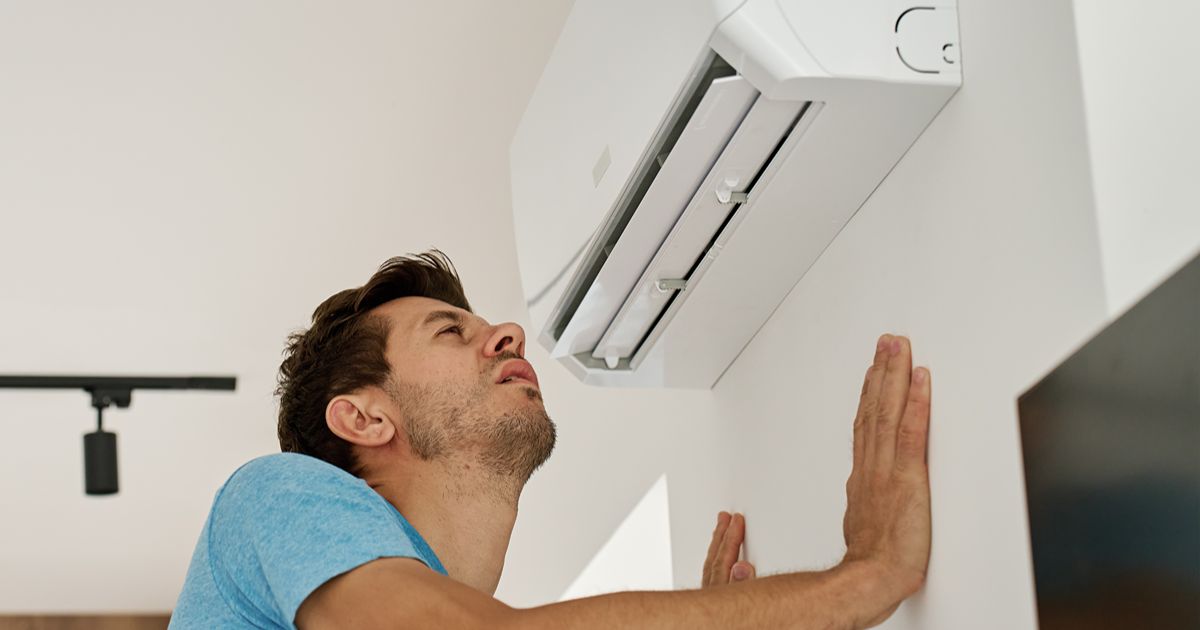
A newly installed AC that is not removing enough humidity is usually running too short, moving air too fast across the coil, or pulling humid air in from somewhere else.
The thermostat hits its number, the system shuts off, and the moisture stays behind.
This shows up fast in Miami, because a house can sit at 78 degrees and still feel clammy.
The unit is often working exactly as installed. The problem is how it was sized or set up.
How an Air Conditioner Removes Humidity in the First Place
Your AC dries the house as a side effect of cooling it. Indoor air passes over a cold evaporator coil, water condenses there, and it drains outside.
Removing moisture takes run time, and a system that satisfies the thermostat in eight minutes barely wets the coil. That is why a bigger unit isn’t always better here.
Is the New System Oversized for the House?
Oversizing is the most common cause behind a humid house with a new air conditioner. A system with too much capacity drops the temperature fast, shuts off, and repeats that cycle all day.
Short cycles mean short run times, and short run times mean wet air.
Signs point to it clearly:
- The house cools quickly but feels damp or sticky.
- The system runs in bursts of ten minutes or less on a hot afternoon.
- Windows or vents sweat even though the air coming out is cold.
Load calculations are what prevent this. A contractor should size the system based on a room-by-room heat load, not the tonnage of the old unit.
That’s why proper AC sizing matters more in a humid climate than in a dry one.
Could the Blower Be Moving Air Too Fast?
Yes, and you can fix this without touching the equipment. Air that crosses the coil too fast does not stay in contact long enough, so less water condenses.
Most systems are set between 350 and 400 cubic feet per minute per ton, and the lower end of that range dries the air more.
Blower speed gets set during startup and commissioning. If that step got skipped, the system may still be on a factory default.
Two other setup items belong here. Refrigerant charge affects coil temperature, so an overcharged or undercharged system dries poorly.
A thermostat fan left on ON instead of AUTO also hurts, because the blower keeps running after the compressor stops and pushes water off the coil back into the house.
Switching that is free, and a smart thermostat install can hold it there with a humidity setpoint.
Is Humid Air Getting In From Somewhere Else?
A perfectly sized system loses the fight if the house keeps feeding it moisture. Ducts in a Miami attic sit in air that is hot and soaked with humidity. Any leak on the return side pulls that air straight into the system.
Check these sources before blaming the equipment:
- Return ducts and the air handler closet, especially seams and boots.
- An unsealed attic hatch or can lights above the conditioned space.
- Bath and kitchen fans that vent into the attic instead of outside.
- A dryer vent with a loose connection.
- New construction or fresh stucco and drywall, which release moisture for months.
That last one is worth calling out. In a new or recently renovated home, the building materials themselves can keep humidity up, no matter how good the air conditioning is.
What to Do About a Miami AC Installation That Leaves the House Humid
Start with measurement, not opinion. Put a hygrometer in the main living area and read it over a full day.
If it sits above 60 percent while the system runs, you have a real problem to hand your contractor.
ENERGY STAR’s heating and cooling guidance is a useful reference on matching equipment to a home.
Then ask for the numbers behind the install: the load calculation, the airflow setting, and the charge.
A reputable Miami AC installation comes with those on paper. Most humidity complaints on new systems get solved by adjusting blower speed, correcting charge, and sealing returns.
If the equipment really is oversized, the fix is harder. A variable speed system can run longer at lower capacity and dry the air much better than a single-stage unit of the same tonnage, which is one reason to weigh the right AC system before the install rather than after.
For a single room that never feels right, mini-split systems give you separate control without replacing everything.
One limit worth naming: no air conditioner is a dehumidifier. On a mild, rainy day when the house does not need much cooling, the system barely runs, and humidity climbs.
That is normal, and it is when a whole-house dehumidifier earns its cost instead of a bigger AC.
Getting Your New System Checked Before the Warranty Clock Runs
A new install that leaves the house humid is more often a setup issue than a defect, and most of it is adjustable.
Log your indoor humidity for a few days, note how long the system runs per cycle, and bring both to your installer while the warranty is open.
A maintenance plan keeps those settings checked twice a year so they don’t drift.