
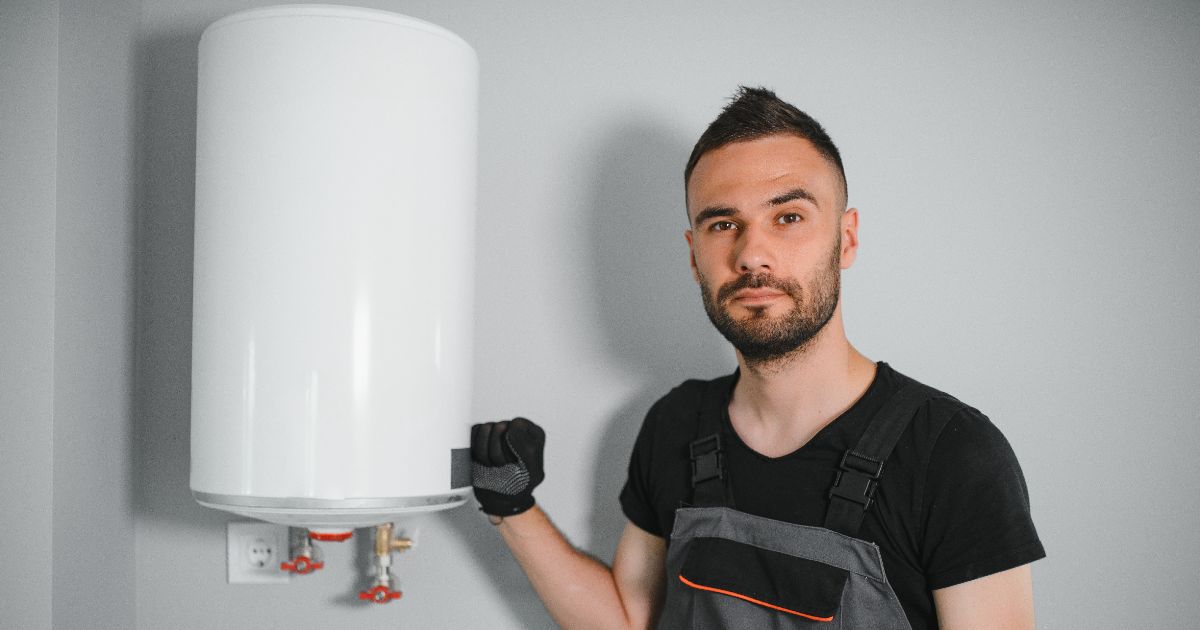
A hot water heater expansion tank is a small tank that absorbs extra water pressure when your water heater heats water.
The tank protects pipes, valves, and the water heater from damage caused by pressure buildup.
I’ll explain what it is, how it works, and when you actually need one.
What Is a Hot Water Heater Expansion Tank?
A hot water heater expansion tank is a safety device. It connects to the cold water line near your water heater.
When water heats up, it expands. That extra volume needs somewhere to go. The expansion tank gives the water a place to move without stressing the system.
Inside the tank is:
- Water on one side
- Air on the other side
- A rubber barrier between them
As pressure rises, water pushes against the air side. This keeps pressure stable and safe.
Water Pressure Increase
Water expands when it heats. This is a basic fact.
In an open plumbing system, extra pressure can flow back into the main water line. In many homes today, that pressure has nowhere to go.
Pressure increases when:
- Water heats inside the tank
- Valves prevent backflow
- The plumbing system is sealed
Without pressure relief, stress builds fast. That stress damages parts over time.
How an Expansion Tank Works
An expansion tank absorbs pressure changes before they cause harm.
Here’s what happens step by step:
- Cold water enters the heater
- The heater warms the water
- Water expands as it heats
- Extra water flows into the expansion tank
- Air inside the tank compresses
- Pressure stays balanced
This process happens every time the heater runs. You do not see it, but it protects your system every day.
Does Your Water Heater Need an Expansion Tank?
Yes, your water heater needs an expansion tank if your home has a closed plumbing system. A closed system does not allow pressure to flow back into the city supply.
Your home likely needs an expansion tank if:
- You have a backflow preventer
- You have a pressure-reducing valve
- You use a tank-style water heater
- Local codes require one
Many modern homes fall into this category. Older homes may not, but upgrades often change that.
If pressure has nowhere to go, damage is only a matter of time.
What Happens Without an Expansion Tank?
Without an expansion tank, pressure builds up in your plumbing system every time water heats.
Common problems include:
- Cracked pipes
- Leaking joints
- Failed valves
- Tank damage
- Water heater failure
The pressure relief valve may open often. This is not normal. That valve is for emergencies, not daily use.
Over time, repairs cost more than installing the tank.
Where Is an Expansion Tank Installed?
An expansion tank is installed on the cold water line near the water heater. It usually sits above the heater but can be mounted sideways with proper support.
Key installation points:
- Connected to the cold water inlet
- Proper air pressure set
- Secure mounting
- Correct tank size
The tank size depends on:
- Water heater size
- Water pressure
- Home plumbing setup
A tank that is too small will not protect the system.
Are Expansion Tanks Required by Code?
In many areas, such as Miami and Kendall, yes. Plumbing codes often require expansion tanks in closed systems.
Codes may require one if:
- A backflow device is present
- A pressure valve is installed
- A new water heater is added
Local rules vary, but inspectors often check for this during installation.
Adding one improves safety, even if it is not required.
Lifespan
Most expansion tanks last 5 to 10 years. Lifespan depends on water pressure and usage.
Common reasons tanks fail:
- Loss of air pressure
- Ruptured internal bladder
- Corrosion
A failed tank no longer controls pressure. Regular checks help catch issues early.
If the tank feels heavy when tapped, it may be full of water and not working.
Expansion Tank vs Pressure Relief Valve
These two parts do different jobs.
An expansion tank:
- Manages daily pressure changes
- Protects pipes and valves
- Works quietly in the background
A pressure relief valve:
- Activates during emergencies
- Releases water when pressure is dangerous
- Should not open often
Both are important. One does not replace the other.
Why Understanding Expansion Tanks is Important
A hot water heater expansion tank prevents pressure damage, protects the plumbing, and extends the system’s life. Many modern homes need one due to closed plumbing systems.
If pressure has nowhere to go, problems will follow. Knowing when and why an expansion tank is needed helps you protect your home and avoid costly repairs.